Johnston C. P. School’s meadow is a vibrant outdoor classroom, where learners plant, study biodiversity, and explore nature, welcoming the community to join in learning and environmental care.
What did you do and how did you involve the whole school?
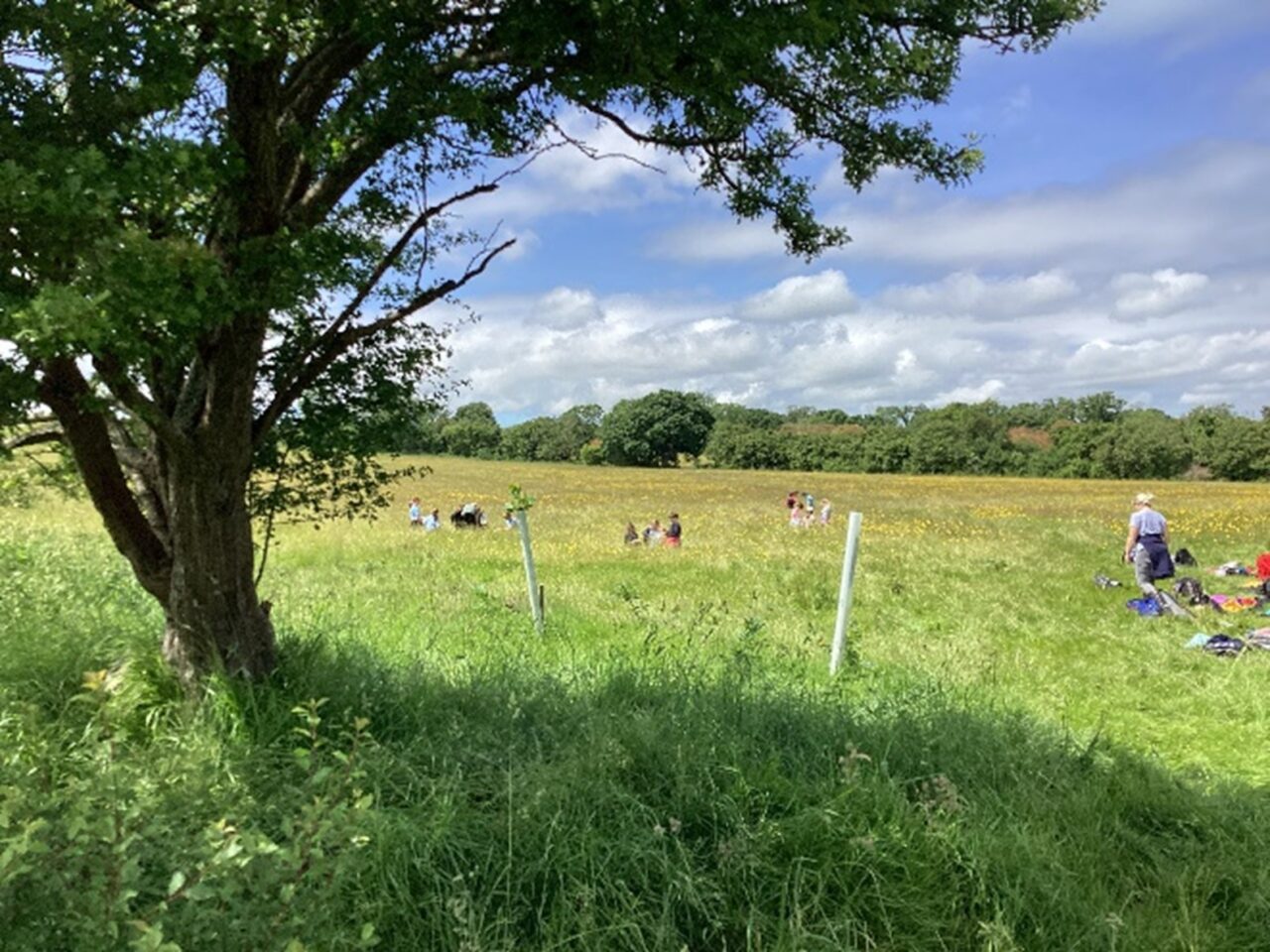
We have been developing our school meadow over the past six years and it has grown into a vibrant outdoor learning space. It now features an orchard, raised beds, a roundhouse, boardwalk, polytunnel, campfire, and pizza oven.
This year, our Year 5 learners conducted a meadow study to explore ways to enhance biodiversity. They visited an established meadow at East Hook Farm to collect data and harvest wildflower seeds.
The meadow is used by learners every day and forms the setting for regular outdoor learning days throughout the year. Thanks to the support of volunteers, every child this year had the opportunity to plant a tree at the bottom of the meadow, contributing to its continued growth and diversity.
How and why did you decide on this target?
Developing the meadow has been an ongoing project. Following discussions with the Sustainability Group, learners wanted to encourage more wildflowers to grow, creating a habitat that supports thriving wildlife.
Learners have been learning about different wildflower species and the important role of yellow rattle, which helps control the growth of dominant grasses in wildflower meadows. By harvesting yellow rattle seeds at East Hook Farm, they were able to sow them in our own meadow, promoting greater biodiversity.
How has the project impacted on your school and your community?
The project has given learners the opportunity to measure biodiversity using the Simpson’s Index and compare their findings. While our meadow does not yet match the score of the meadow they visited, learners noted that our biodiversity has improved compared to last year.
In addition, harvesting native wildflower seeds has led to exciting evidence that yellow rattle has begun to grow in our meadow, supporting the development of a richer, more diverse habitat.
How did you celebrate success and what are your next steps?
As a school, we are very proud of our meadow. We open it to the public during our summer fete, and families can also explore and enjoy the space through weekly Springboard community learning activities.
We will continue to develop a diverse and vibrant meadow, aiming to increase our biodiversity index score by next year. This will support a wider range of pollinators, insects, birds, and wildflowers, further enhancing the meadow as a thriving natural habitat.
The impact of the meadow project on our school and wider community has been profound. It has given learners real ownership over their environment and empowered them to apply scientific skills in a meaningful context. Using the Simpson’s Index, they’ve been able to track and compare biodiversity over time, with clear evidence that our meadow is becoming more diverse each year. The discovery of yellow rattle growing—thanks to the seeds they harvested—was a real moment of celebration.
Mr Cheung Deputy Headteacher
I have really enjoyed taking part in the meadow study, I liked finding different plant species.
Year 5 Learner
Fill out our form and inspire others.
Submit your changemaker story
Find out more information on the seven seven steps to success.
How it worksBe inspired by other success stories
Crickhowell High School, Powys
Read More
Active Travel at Ty’n y Wern
Read More
Llantwit Major School, Vale of Glamorgan
Read More