Walking the dog is one of life’s simple pleasures and it is great for our wellbeing, offering exercise and time outdoors. Despite this, dog fouling remains a persistent issue in communities across Wales.
From 2024 to 2025, our volunteer submissions show a rise in dog fouling presence, increasing from 31.2% to 41.7% respectively. Additionally, our litter surveys for 2025 found dog fouling on 13.7% of publicly accessible sites*, with an estimated 219,000 instances of dog fouling across Wales.
There are many reasons why the volunteer data could be different to our litter survey data. For example, there are considerably more volunteers than the five surveyors at Keep Wales Tidy, and volunteers cover a much wider area and range of locations than our surveyors do. However, a deep dive into the data reveals behavioural insights that could help tackle the problem.
While we see a lot of loose or unbagged dog foul in our shared spaces, our data shows that almost half of all dog fouling instances seen are bagged – a clear indication that many walking their dogs are halfway to doing the right thing.
A lack of bins is often used as an excuse for leaving litter or dog foul, but more bins aren’t always the answer. While strategically placed bins on popular dog walking routes could encourage dog walkers to take the crucial step of binning their bag, all of us have the option to take our waste home to keep our communities clean and safe.
What are the risks?
Dog fouling that is left on the ground or improperly disposed of is more than just an eyesore. It poses risk to our environment, wildlife and public health.
Parasites or bacteria found in dog foul can cause significant risks, ranging from minor illnesses to serious conditions such as toxocariasis. One study by Aberystwyth University found that uncollected dog foul is 2.6 times more likely to carry infection or parasites compared to dog foul that had been disposed of correctly.
As children are most likely to step in or pick up dog foul as they walk to school or play in parks, it is vital that dog walkers do the right thing by bagging and binning their dog mess.
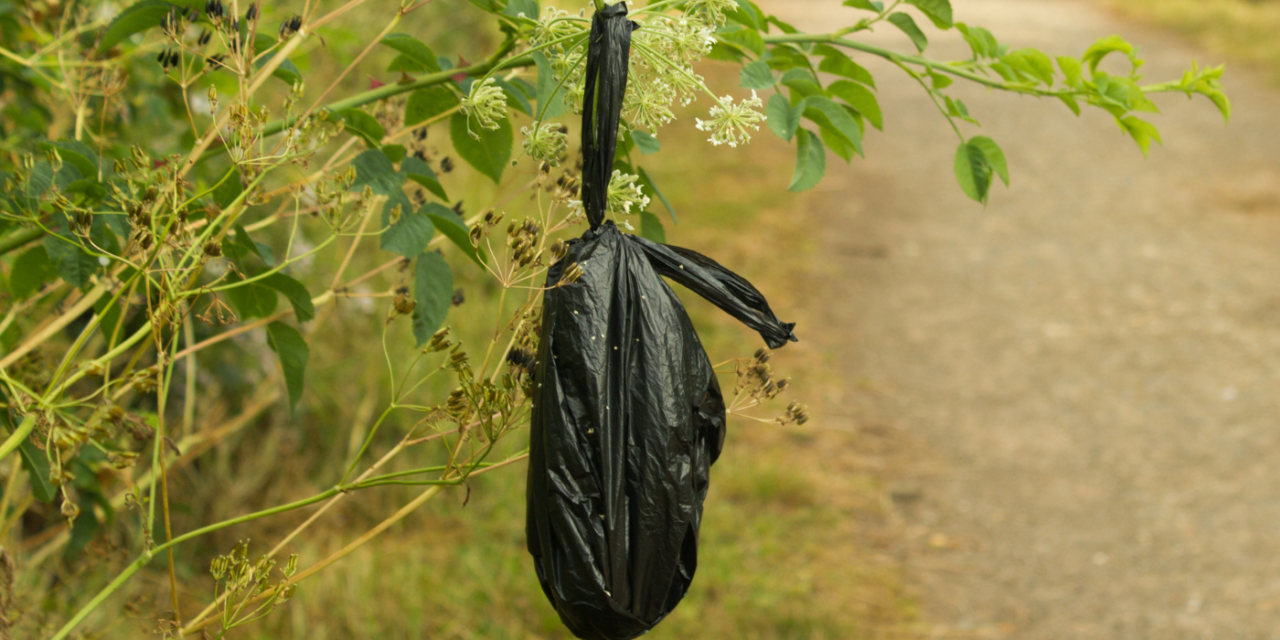
Additionally, bagged dog fouling that is often thrown in hedges, hung on trees or placed next to full bins raises its own issues. Dog poo bags, often made from plastic, take a long time to deteriorate and as they do, they break down into microplastics, which causes long term damage to our soils, waterways and wider environment.
No dog bin? No problem!
Did you know that dog waste can go in any general litter bin – it doesn’t need to be a dog poo bin. If there are no bins available or the bins are full, it is important that we take our dog waste home to dispose of it properly. Leaving it behind, even neatly bagged or tied, is still littering (and it is still harmful)!
Our message is simple – bag it, bin it and leave only pawprints this autumn to keep our communities clean and safe.
*Keep Wales Tidy litter surveys are carried out by trained staff on streets, parks or green spaces, bathing water beaches and transport hubs. We do not survey motorways, fast roads or remote and hard to access areas.
Don’t forget to keep logging your litter picking data on eCount Cymru here
Continue reading...

Local action creates lasting change: Wales’ environmental champions celebrated at Tidy Wales Awards 2026
Read More
Welcome back, schools! A new year of Eco-Schools action begins
Read More
Inside the issues: an update from our Policy and Research Team
Read More